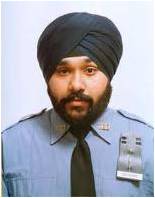


Although
Sikh men are as susceptible to other forms of hair loss as anyone else, they
commonly suffer from what is known as traction alopecia. This occurs when the knotting
of long hair pulls on the hair over time so that its roots are damaged. It is
different from pulling hair out accidentally when taking the turban on or off.
It is a slow process but it can be irreversible.
Sikhs
males have religious reasons not to cut their hairs throughout the life. The
long hairs are kept hidden under their turban after winding them in a ‘Rishi knot’. It is an irony that this
long hairs due to constant traction on the root due to this knot result in
premature hair loss over the years. This especially happens in the frontal and
temple area where the traction stress is maximum. This is common to all those
Sikhs round the world may be in millions. It's a subject rarely discussed
because it's relatively easily hidden, but hair loss is a big problem among
Sikh men and covering it up doesn't take away the associated distress.
Traction
alopecia can be exacerbated by the ritual combing of the hair. This can be
alleviated by straightening out the hair and working through tangles with the
fingers before combing, thereby reducing the pull of the comb. It's important
to keep the hair soft and in good condition even if you're not worried about
other people seeing it.
To prevent this problem, I
would advise avoiding unnecessary stress on the hair by winding the
‘Rishi’ knot less tightly. The
problem is not with wearing the turban, but with improper hair care. Hair
must be combed down at night and then joora
retied in the morning. Keeping joora tied all the time does not allow hairs to
relax properly.
Use a
light fabric and only use as much fabric as is absolutely necessary to contain
the hair. The weight of extra fabric will put added strain on your hair. Be
careful not to bind the turban too tightly - it's better to secure it with
grips further back on the scalp if necessary, as hair is most vulnerable toward
the front of the head. With Be careful to position your hair directly on top of
your head before you bind it. This will enable your head to support most of the
weight of your hair directly when you are upright. If you tend to lean
backwards when sitting, be careful to keep your head upright.
Some
Sikhs who suffer from traction alopecia choose to give up on wearing turbans
altogether and to keep their hair in pony tails instead. If you do this, make
sure that you don't draw it back too tightly from your head and that you secure
it loosely.
It is
interesting to note that traction alopecia often occurs as a result of various
headwear and hair styles, including hair extensions, wearing tight ponytails
and wearing tight fitting-hats.
But if
you take care to look after your hair and bind it appropriately, you are likely
to be able to keep much of the length of it at the back for most of your life.
As a permanent solution to restore hair, hair Transplant is recommended as it is not possible to medically
restore lost hair as shown in one of my patients.


